 April 27, 2026 - By : Mike Blake
A single miscalculation in axle loading doesn’t just stall a project; it invites regulatory scrutiny that can dismantle years of operational prestige. You understand that moving 80-tonne loads through the narrow arteries of Manchester or Glasgow is a high-stakes chess match where the rules change with every bridge crossing. In this environment, STGO Cat 2 Haulage is not merely a logistical requirement but a strategic pillar of infrastructure delivery. We recognize the weight of these responsibilities and the pressure to maintain seamless movement while avoiding the heavy fines associated with notification errors.
This guide provides the strategic clarity needed to master Category 2 regulations, ensuring your heavy-lift operations meet the 2026 compliance standards with absolute precision. We’ll examine the specific weight limits that define this tier, the nuances of police notifications, and the methodology for selecting a logistics partner that mirrors your commitment to value creation. From technical specifications to urban navigation, you’ll gain the confidence to transform logistical bottlenecks into competitive advantages.
The logistics of heavy industry require a departure from standard road regulations. While Construction & Use (C&U) rules govern the majority of UK freight, STGO Cat 2 Haulage provides the essential legal framework for moving loads that exceed the typical 44-tonne limit. This category serves as a strategic bridge for operators, facilitating the transport of Gross Vehicle Weights (GVW) between 44,000kg and 80,000kg. We view this weight bracket as the optimal solution for mid-heavy industrial assets, balancing capacity with operational agility.
Achieving compliance starts with Understanding Abnormal Loads and how they deviate from standard freight. STGO, or Special Types General Orders, authorizes the movement of cargo that is too heavy or large for standard trailers. By 2026, the demand for this specific capacity has grown by 12% in the UK’s manufacturing sectors, as projects require larger, pre-assembled modules to ensure site efficiency.
To better understand this concept, watch this helpful video:
Compliance within Category 2 hinges on precise weight distribution. Every vehicle must adhere to a 12,500kg maximum axle weight limit to protect the UK road network from excessive wear. We ensure our partners prioritize the STGO plate, a physical requirement that clearly displays the vehicle’s category and weight limits. This plate isn’t just a label; it’s a vital tool for roadside enforcement and a marker of operational integrity in high-stakes environments.
A load qualifies as an AIL only if it cannot be divided into smaller parts without undue expense or risk of damage. This legal distinction is crucial for infrastructure projects in hubs like Leeds and Birmingham, where high-value equipment must arrive intact. By utilizing STGO Cat 2 Haulage, we help clients manage the complexities of transporting indivisible assets, ensuring that strategic logistics support long-term growth and project stability without unnecessary disassembly costs.
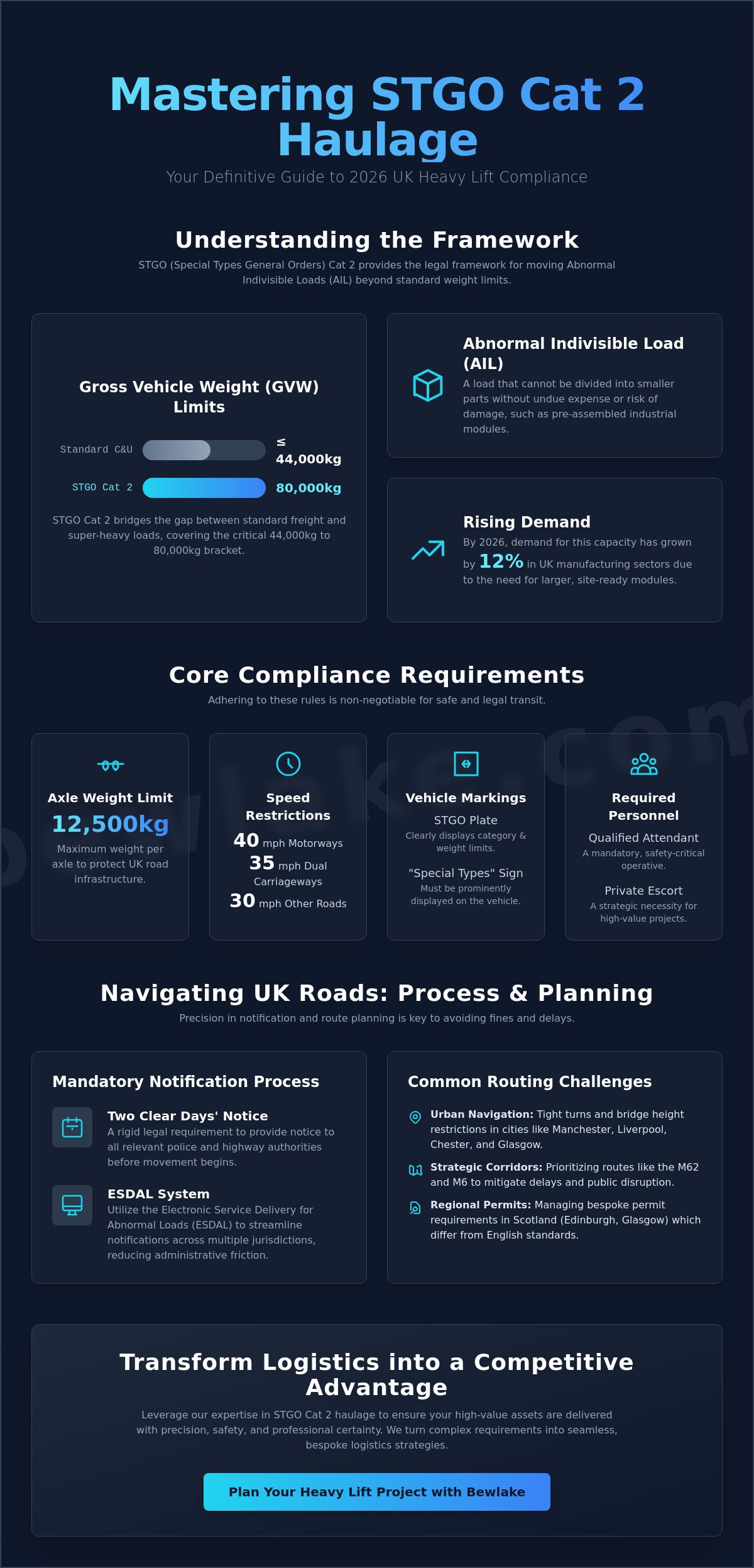
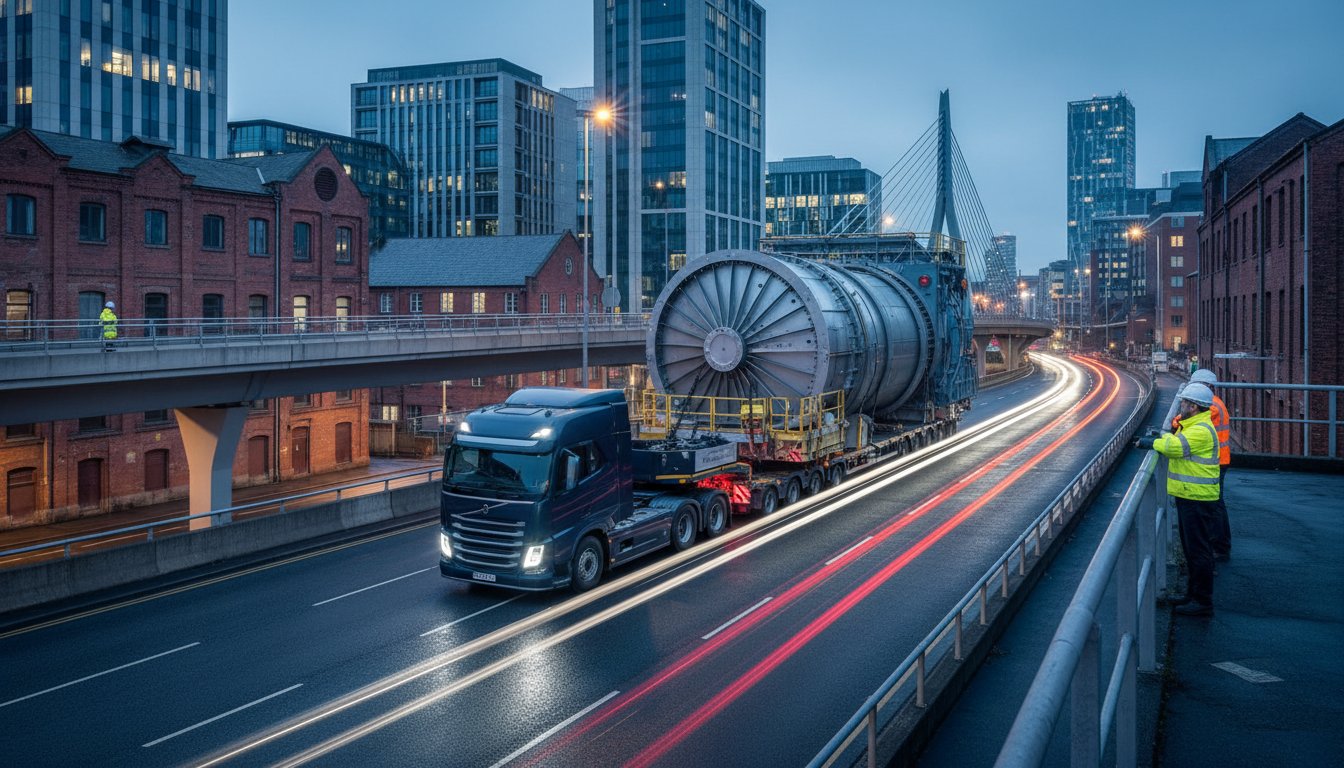
Precision defines the logistical execution of STGO Cat 2 Haulage. Success hinges on a mandatory two-day clear notice period provided to police authorities before any movement begins. This timeline is a rigid legal requirement under the STGO Regulations 2003. To maintain operational flow and ensure every stakeholder is aligned, we utilize the Electronic Service Delivery for Abnormal Loads (ESDAL) system. This digital framework streamlines notifications across multiple jurisdictions, effectively reducing the administrative friction that can often stall complex projects.
Velocity is strictly governed to protect both the infrastructure and the public. Drivers must adhere to 40mph on motorways, 35mph on dual carriageways, and 30mph on all other roads. Every vehicle must prominently display a “Special Types” sign. This visible marker, combined with the presence of a qualified attendant, ensures that the vehicle’s footprint is managed with absolute control. The attendant isn’t merely a passenger; they are a safety critical operative responsible for maneuvering and public protection.
Moving heavy assets through the North West and Scotland requires granular planning. Historic city centres like Chester present significant bridge height restrictions and tight urban turns that can trap unprepared operators. We prioritize strategic corridor planning along the M62 and M6 to mitigate delays and ensure minimal disruption. In 2024, local authority variations in Edinburgh and Glasgow continue to require bespoke permits that differ from English standards. Managing these regional nuances is essential for a seamless delivery schedule.
While a private escort vehicle is not always a legal mandate for Category 2 loads, it’s frequently a strategic necessity for high-value projects. An escort provides a vital buffer, managing traffic flow and allowing the driver to focus on the technical demands of the route. The attendant’s role remains the backbone of ground-level safety, acting as a secondary pair of eyes during complex turns. For firms looking to refine their logistics strategy, a bespoke advisory partnership ensures that safety and efficiency are never compromised. This collaborative effort transforms a standard transport move into a highly coordinated strategic operation.
Bewlake operates as a sophisticated partner for Tier 1 contractors, aligning our operational capacity with your project’s long-term growth. We don’t just move assets; we manage strategic capital through STGO Cat 2 Haulage capabilities combined with an ultra-modern HIAB crane fleet. Our family-run values ensure a level of accountability that larger, impersonal firms often lack. By maintaining a seat at the table with the Heavy Transport Association (HTA), we stay at the forefront of safety regulations and industry best practices. This commitment allows us to deliver dedicated transport solutions that integrate ADR certification and comprehensive risk management for every journey.
Efficiency in the 2026 logistics market requires a seamless link between transport and installation. We integrate oversize load transport with on-site crane support to eliminate the friction of multi-vendor coordination. Our team recently demonstrated this logic by moving 32-tonne modular units in Leeds, where we synchronised delivery with site-specific lifting schedules to prevent idle time. Similarly, our work on telecom infrastructure in Rugby involved navigating tight urban corridors with centimetre-perfect precision. These projects succeed because we treat logistics as a calculated advisory process rather than a simple haulage task.
Our strategic presence in Manchester, Liverpool, and Birmingham ensures rapid response times and deep local knowledge of UK route restrictions. This regional expertise is vital when planning STGO Cat 2 Haulage routes that require police notification or structural surveys. We also bridge the gap for complex cross-border requirements by leveraging our specialised haulage Ireland expertise. Whether your project moves from the Midlands to the Highlands or across the Irish Sea, the Bewlake standard of calm reliability remains constant. We protect your reputation by ensuring every delivery is measured, intentional, and secure.
The logistics landscape of 2026 demands more than sheer capacity; it requires a synthesis of regulatory mastery and operational agility. Successfully managing STGO Cat 2 Haulage involves navigating the 80-tonne gross weight threshold while adhering to strict five-day notification windows required by UK police authorities. Efficiency in this sector isn’t accidental. It’s the result of meticulous planning and a deep understanding of regional routing constraints from Rugby to Edinburgh. Since the 1930s, our third-generation family expertise has focused on bridging the gap between complex infrastructure requirements and seamless execution. We maintain an ADR Certified Fleet to ensure that even the most hazardous or specialized movements meet every safety standard across the UK and Ireland. Our comprehensive network provides total coverage, turning logistical hurdles into predictable outcomes. We’re ready to help you optimize your supply chain through bespoke advisory and elite execution. Your next project deserves the security that comes from nearly a century of specialized experience. Consult with our Specialist Logistics Team for your STGO Cat 2 project. We look forward to building a lasting partnership that moves your business forward.
An STGO Cat 2 vehicle allows for a maximum gross vehicle weight of 80,000kg. This threshold applies specifically to the combined weight of the tractor unit, trailer, and the abnormal load itself. We maintain strict adherence to the 12,500kg maximum axle weight limit defined by the Road Vehicles (Authorisation of Special Types) (General) Order 2003. Precision in these measurements is vital for maintaining structural integrity and road safety across the UK network.
You must provide a minimum of two clear working days’ notice to the police before moving an STGO Cat 2 load. This notification period allows authorities to assess the proposed route for potential obstructions or scheduled maintenance. For loads exceeding 3.5 metres in width or 18.75 metres in length, additional coordination through the ESDAL system is essential. We manage these timelines meticulously to avoid any operational delays or regulatory penalties during the haulage process.
Escort vehicles aren’t legally mandatory for all STGO Category 2 haulage movements, but they’re often required if the load exceeds 3.5 metres in width. The requirement typically depends on the specific route and the individual police force’s assessment of risk. We recommend deploying private escorts for any load over 3 metres wide to mitigate risks and ensure the safety of other road users. This proactive approach protects your capital assets while maintaining a steady logistical flow.
The primary distinction lies in the maximum gross vehicle weight, where Category 1 permits up to 50,000kg and STGO Cat 2 haulage allows for up to 80,000kg. Speed limits also differ significantly; Cat 2 vehicles are restricted to 40mph on motorways and 25mph on other roads. Choosing the correct category is a strategic decision that impacts both your operational timeline and the efficiency of your logistics budget. We help partners navigate these technicalities to secure the most effective transport solution.

Leave a comment