 June 15, 2026 - By : Mike Blake
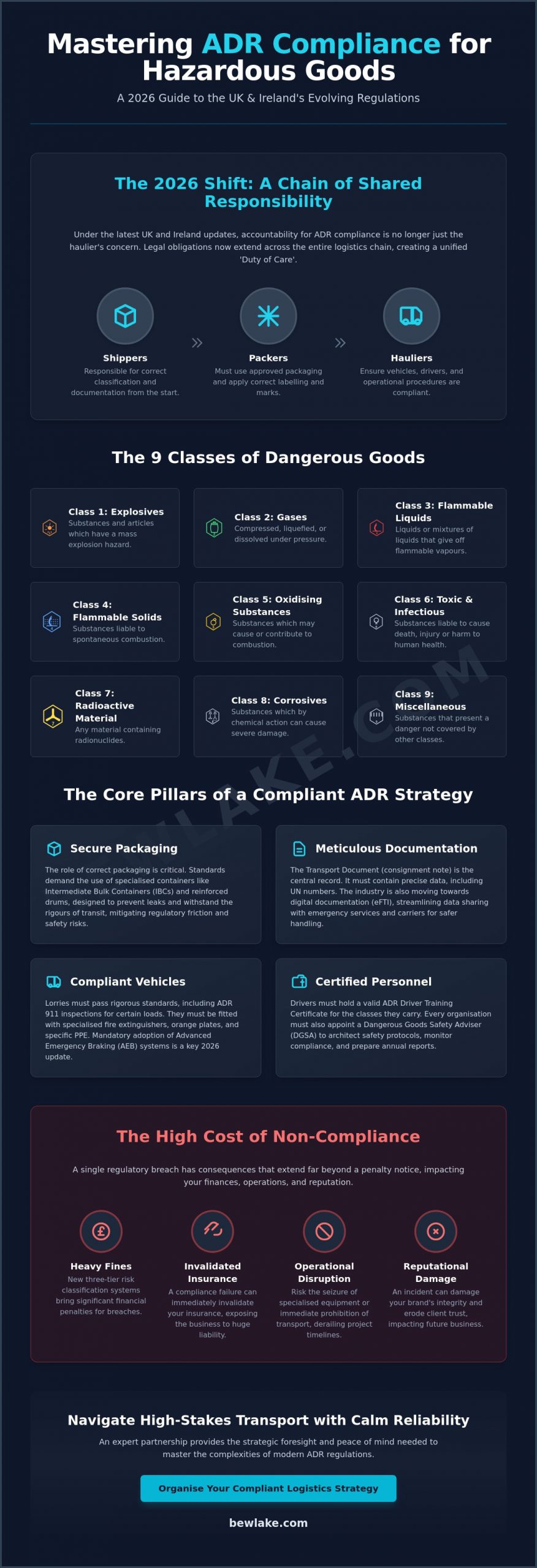
In 2026, the legal landscape for ADR compliance for hazardous goods has fundamentally shifted. It’s no longer just the haulier’s concern. With the latest UK and Ireland updates, accountability now extends across the entire logistics chain, meaning shippers and packers share the weight of regulatory precision. You’ve likely felt the pressure of these evolving standards, perhaps worrying about the heavy fines associated with the new three-tier risk classification or the confusion of complex classification codes. This anxiety is natural when the safety of high-stakes transport is on the line.
We understand that managing hazardous cargo requires more than just a lorry; it demands a sophisticated partnership rooted in calm reliability. This article promises to help you master the complexities of modern ADR regulations, ensuring your goods are transported with absolute compliance and strategic foresight. We’ll examine the critical June 2026 updates, the mandatory adoption of Advanced Emergency Braking systems, and how digital documentation through eFTI is reshaping the industry. By the end, you’ll have a clear understanding of your obligations and the peace of mind that comes with a strategically aligned logistics strategy.
ADR stands for the European Agreement concerning the International Carriage of Dangerous Goods by Road. It’s a strategic framework rather than just a list of rules. In 2026, achieving ADR compliance for hazardous goods is a shared responsibility that safeguards your personnel, the environment, and your corporate standing. A single error can ripple through a project, causing delays that impact your bottom line and your brand’s integrity. We view compliance as the foundation of reliable logistics, ensuring that every movement is executed with quiet confidence.
To better understand this concept, watch this helpful video:
Every organisation involved in the regular transport of dangerous goods must appoint a Dangerous Goods Safety Adviser (DGSA). This specialist acts as the architect of your safety protocols, monitoring compliance and preparing the essential annual reports that document your adherence to safety standards. This ensures that the "Duty of Care" is upheld by everyone from the consignor to the loader. This shared accountability means that legal obligations aren’t just limited to the driver behind the wheel of the lorry; a similar dedication to person-centered standards can be found in professional home care services at bloomfield-care.com.
The UK’s Carriage of Dangerous Goods (CDG) regulations effectively codify the ADR (treaty) into domestic law. Post-Brexit logistics demand this consistency to keep UK-EU transit fluid and frictionless for high-stakes cargo. Under the updated 2026 legal standards, ADR compliance for hazardous goods is defined by a three-tier risk classification system that mandates full accountability across the entire logistics chain from the moment a package is sealed.
The impact of a regulatory breach goes far beyond a simple penalty notice. A failure in compliance can immediately invalidate your insurance, leaving the business exposed to significant corporate liability in the event of an incident. Beyond the financial hit, you face severe operational friction. This includes the potential seizure of specialised equipment or the immediate prohibition of your transport, which can derail the timeline of a critical infrastructure project.
A robust approach to ADR compliance for hazardous goods requires a meticulous focus on technical data. Every substance is categorised into one of nine distinct classes, ranging from Class 1 explosives to Class 9 miscellaneous hazardous substances. This classification informs every subsequent decision, from the selection of specialised packaging like Intermediate Bulk Containers (IBCs) and reinforced drums to the specific UN numbers that must be displayed. Precise identification ensures that every stakeholder understands the unique risks involved. The Transport Document, or consignment note, serves as the central record for this data, providing emergency services and carriers with the information needed for safe handling.
Accurate labelling acts as the primary visual communication tool during transit. While GHS labels provide essential chemical safety information, ADR diamonds are the mandatory standard for road transport. The Carriage of Dangerous Goods Regulations mandate that these markings remain legible and accurate at all times. For smaller consignments, Limited Quantity exemptions may offer a more streamlined path. However, these carve-outs still require careful validation to avoid regulatory friction and ensure the safety of the entire supply chain.
The human element is just as critical as the hardware. Drivers must hold a valid ADR Driver Training Certificate, tailored to the specific classes they carry. This ensures they’re equipped to handle emergencies with calm authority and professional precision. Every lorry must also pass rigorous standards, including ADR 911 inspections for certain hazardous loads. These vehicles are outfitted with specialised fire extinguishers, orange plates, and specific PPE to mitigate risk. Our team provides bespoke ADR transport solutions that integrate these technical requirements into a seamless, managed service, allowing you to focus on your core operations while we handle the compliance burden.
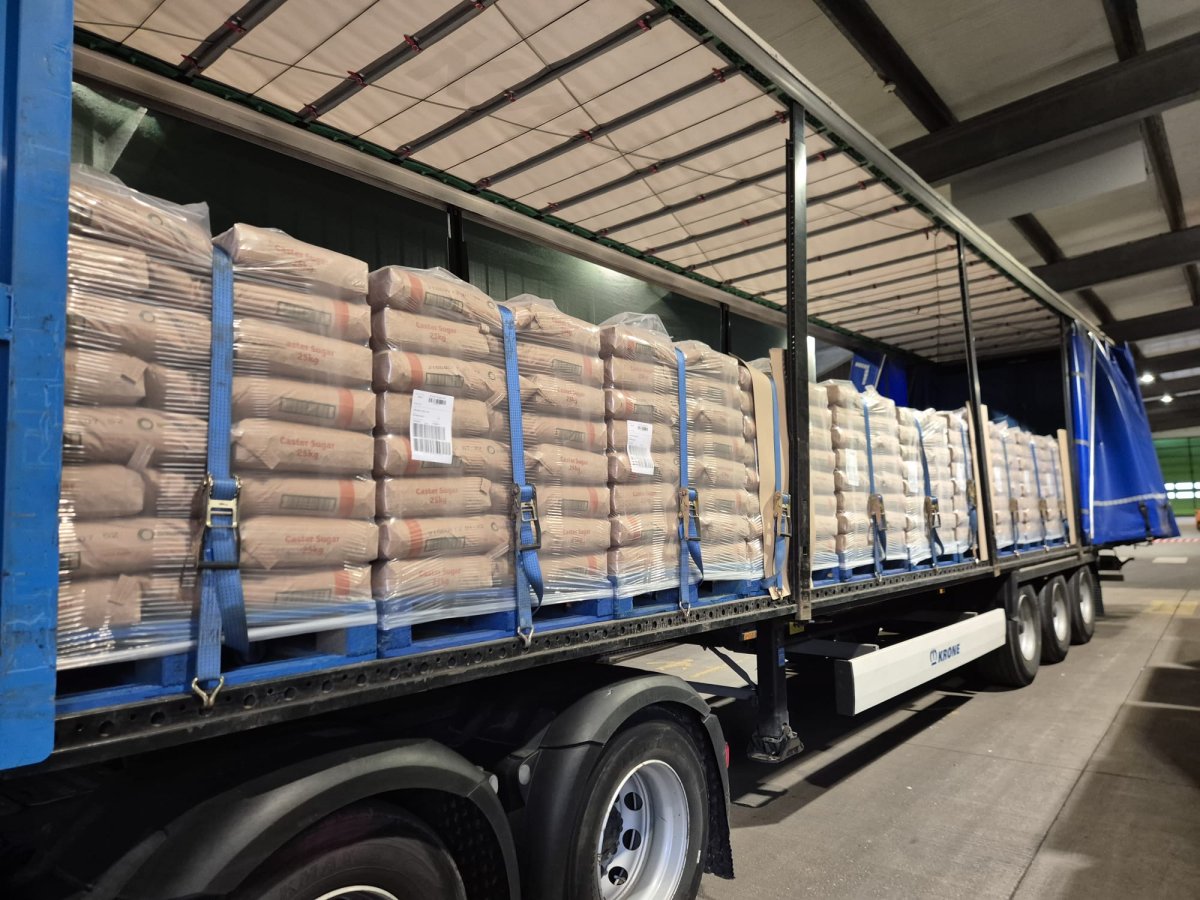
Selecting a partner for ADR compliance for hazardous goods is a decision of capital importance. In major industrial hubs like Manchester and Liverpool, the margin for error in hazardous transit is non-existent. We provide an ultra-modern fleet that serves as a strategic hedge against mechanical volatility, ensuring that high-stakes cargo moves without interruption. While some organisations view compliance as a mere cost centre, we frame it as a vital investment in asset protection. By strictly adhering to the UK regulations for moving dangerous goods, you aren’t just following rules; you’re insulating your business from the catastrophic financial and reputational fallout of a regulatory breach.
A significant gap often exists in the logistics chain where haulage ends and site placement begins. We bridge this by providing ADR-certified HIAB operators who manage the entire lifecycle of a delivery with professional precision. Whether you require delivery to a remote telecoms infrastructure site or a restricted urban environment, our HIAB hire solutions offer integrated lifting that maintains absolute compliance from the lorry bed to the final position. Our all-terrain tracked cranes further enhance this capability, allowing for safe, compliant deliveries in locations that would otherwise compromise standard equipment or safety protocols.
As a third-generation family business, we prioritise relationship-building and mutual achievement over standardised volume models. Our approach focuses on "low stress" professional execution, particularly when navigating the specific complexities of specialised haulage in Ireland. Cross-border transit requires a nuanced understanding of both UK and Irish enforcement standards to ensure regulatory friction doesn’t delay your project. We invite you to engage in a strategic consultation to tailor your ADR logistics. This alignment ensures that your project requirements are met with the intellectual sharpness and calm reliability your stakeholders expect.
The regulatory landscape of 2026 demands more than just adherence; it requires foresight. We’ve discussed how a deep mastery of the ADR framework and technical classification pillars can turn a complex obligation into a streamlined strategic advantage. Achieving ADR compliance for hazardous goods is ultimately about de-risking your operations while maintaining the momentum of your most critical projects. It’s a commitment to safety that preserves both your physical assets and your corporate reputation.
Our family-run firm bridges the gap between high-level planning and practical execution. We provide three generations of transport expertise, an ultra-modern ADR-certified fleet, and operators who understand the high stakes of your industry. By integrating specialised HIAB and tracked crane capabilities, we offer a level of precision that standard hauliers simply can’t match. This commitment to calm reliability ensures your cargo arrives safely and without regulatory friction, regardless of the site’s complexity. Similarly, this level of care is vital for the event industry; for example, mobile golf simulator hire Ireland relies on precise logistics to deliver a high-end experience at corporate gatherings.
Consult our ADR specialists today for a compliant logistics strategy to secure your supply chain. We’re ready to help you move forward with the confidence and clarity your business deserves.
An ADR-certified lorry is a vehicle that has undergone specific structural and safety modifications to carry dangerous goods, such as fire-resistant shielding and specialised electrical wiring. Unlike standard haulage, these vehicles must pass a rigorous annual inspection to ensure they meet the technical standards required for hazardous transit. They are also equipped with mandatory safety kits and orange plates to signal the nature of the cargo to emergency services.
You are legally required to appoint a DGSA if your organisation’s activities include the regular carriage, packing, or loading of dangerous goods. While certain "limited quantity" exemptions exist for very small shipments, a DGSA ensures that your overarching protocols for ADR compliance for hazardous goods remain robust and legally sound. They provide the necessary oversight to prevent regulatory breaches across your entire logistics chain.
We specialise in the transport of several key hazardous classes, including flammable liquids, corrosive substances, and miscellaneous hazardous materials. Our fleet is specifically equipped to handle complex consignments that require both ADR certification and specialised lifting capabilities. By focusing on these specific classes, we ensure that our operators possess the deep technical expertise needed to manage your cargo with absolute precision and safety.
Transit between the UK and Ireland requires meticulous attention to the ADR treaty and specific national regulations that come into full force in June 2026. While the core framework remains consistent, cross-border logistics involve navigating different enforcement bodies and potentially varying documentation requirements at ports. We manage this complexity by ensuring all paperwork and vehicle markings meet the highest international standards, preventing delays and ensuring a frictionless transition between jurisdictions.
Only operators who hold a valid ADR Driver Training Certificate with the relevant class modules are permitted to handle hazardous goods. Standard HIAB training doesn’t cover the specific risks or emergency response protocols associated with dangerous substances. Our operators are dual-certified, combining advanced lifting expertise with the specialised knowledge required for ADR compliance for hazardous goods at complex or restricted loading sites.
Every shipment must be accompanied by a Transport Document, often called a dangerous goods note, which details the UN number, proper shipping name, and hazard class. Additionally, drivers must carry written instructions in a language they understand, outlining specific emergency procedures. These documents are vital for ensuring that emergency services can respond effectively if an incident occurs, protecting both your personnel and the environment.

Leave a comment